
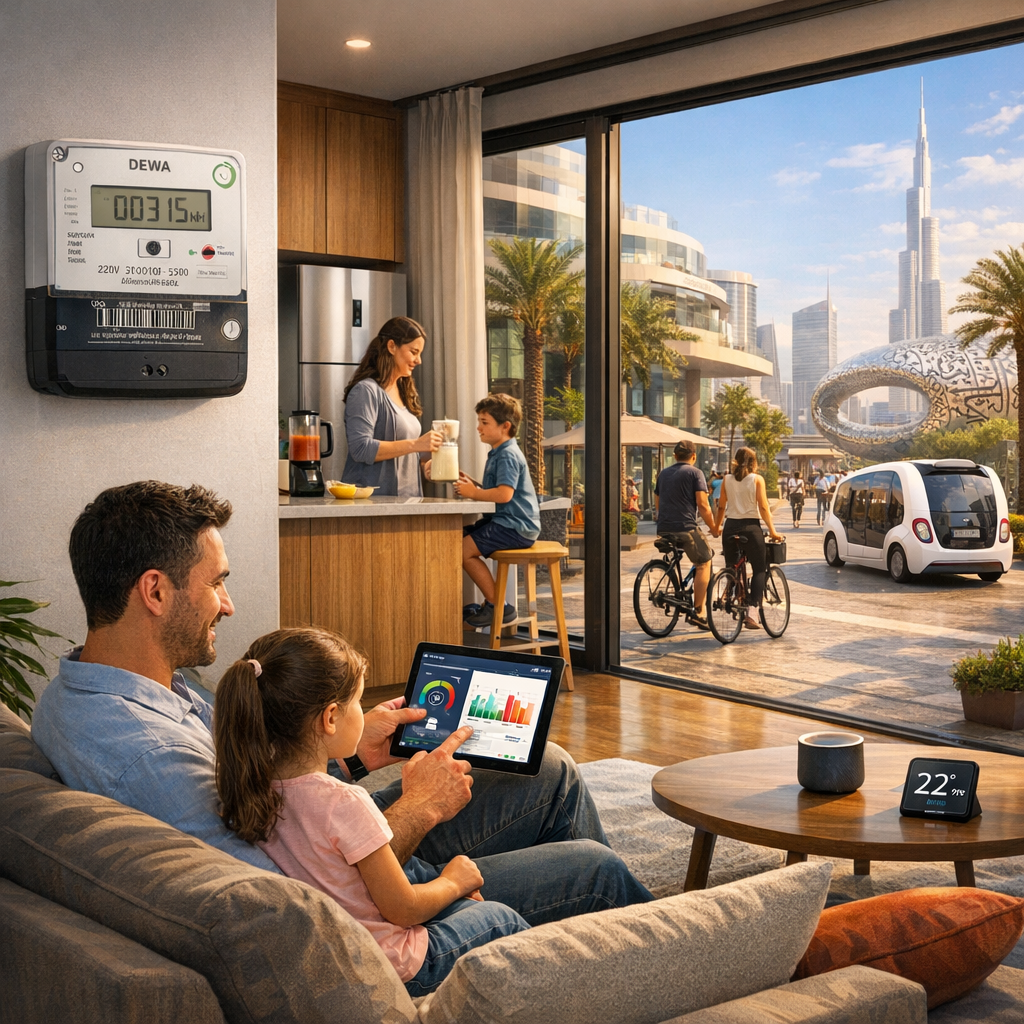
Navigating daily logistics and managing household costs efficiently is a cornerstone of comfortable expat living in Dubai, particularly in 2026. With an average monthly cost of living for a family of four (excluding rent) hovering around AED 14,500, every fil saved counts. This guide offers practical advice on optimizing your utility bills and leveraging Dubai’s evolving ’20-minute city’ infrastructure to enhance your daily life.
**Optimizing DEWA/Empower Bills for Summer Savings**
The scorching summer months in Dubai mean air conditioning can account for 60-70% of your electricity bill. The Dubai Electricity and Water Authority (DEWA) provides clear guidelines for conservation. The single most impactful change you can make is optimizing your AC usage. DEWA recommends setting your thermostat to a constant 24°C; every degree lower can increase consumption by 5-9%. Using the ‘Auto’ fan mode, cleaning AC filters monthly, and utilizing ceiling fans to circulate cool air can also significantly reduce costs. Closing curtains during the day helps keep heat out, lessening the AC’s load.
Water consumption is another critical area. Install water-saving devices like aerators on taps and efficient showerheads. Crucially, fix any leaks promptly; a dripping tap wastes gallons daily. DEWA’s Smart Living Dashboard and ‘Away Mode’ are invaluable tools for monitoring your consumption patterns and receiving alerts about unusual spikes, helping you proactively manage usage and prevent unnecessary costs.
Be mindful of DEWA’s peak load hours, typically between 12 PM and 6 PM in summer. Avoiding heavy appliance use, such as washing machines and dishwashers, during these times can contribute to savings. Upgrading to LED lighting throughout your home is also a wise investment, as it drastically reduces electricity usage compared to traditional bulbs. Regular professional AC maintenance, ideally every four months, ensures your unit runs at peak efficiency.
**Embracing Dubai’s 20-Minute City Infrastructure**
Dubai’s ambitious ’20-Minute City’ plan, recently approved by Sheikh Hamdan under the Dubai 10X Initiative, is set to redefine urban mobility and accessibility by ensuring residents can reach 80 percent of essential services and amenities within a 20-minute commute by walking, cycling, or sustainable public transport. This vision, integrated with the Dubai 2040 Urban Master Plan, aims to reduce reliance on private cars, alleviate traffic congestion, and promote healthier, more connected communities.
The Roads and Transport Authority (RTA) is at the forefront of this transformation. Investments in expanding public transport networks, improving cycling infrastructure, and growing pedestrian routes are making sustainable travel easier and more appealing. The city is also pioneering future mobility solutions, including autonomous taxis and the planned launch of flying taxis by 2026, which will connect areas rapidly and efficiently.
For residents, this means less time spent commuting and more time for family, leisure, and personal pursuits. Neighbourhoods are being designed for walkability, with shaded pathways, local parks, and essential services like schools, clinics, and shops closer to home. The Dubai Walk Master Plan, an interconnected network of 6,500km, with 3,300km of new pathways, is underway for completion by 2040, further solidifying this vision.
By smartly managing utility consumption and actively engaging with Dubai’s progressive urban planning, residents can enjoy a more cost-effective, convenient, and sustainable lifestyle. The commitment to innovation and quality of life ensures Dubai remains a leading global city for expats.