
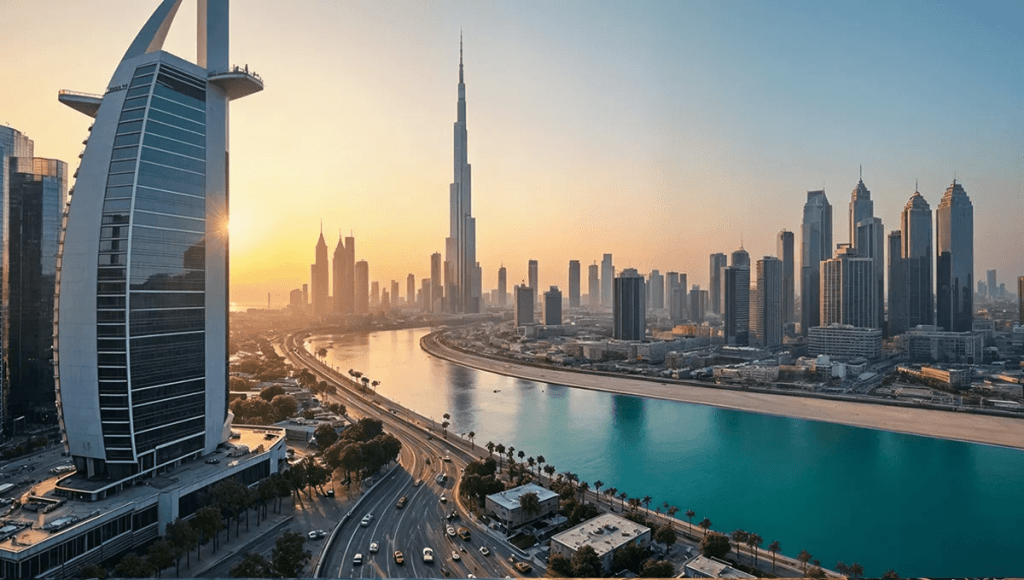
Dubai’s real estate sector delivered a strong performance in the first quarter of 2026, recording property transactions worth Dh138.7 billion across 44,150 deals, reinforcing the emirate’s reputation as a preferred destination for global investors and end-users alike.
According to market data, transaction values increased by 21.2% year-on-year, while overall volumes rose 4.35%, highlighting a clear shift toward higher-value purchases and premium residential investments. Industry experts attribute this trend to sustained confidence among long-term investors who increasingly view Dubai as a strategic hub for capital allocation rather than speculative trading.
Average residential property prices reached approximately Dh1,949 per square foot during the quarter. Off-plan apartments averaged Dh2,100 per sq. ft., while secondary market villas achieved around Dh2,354 per sq. ft., reflecting strong demand for spacious family-oriented homes and master-planned communities.
Emerging residential districts such as Jumeirah Village Circle, Dubai South, and DAMAC Islands continued to attract both investors and end-users due to improved infrastructure, connectivity to business hubs, and comparatively competitive pricing.
January alone recorded property transactions worth Dh53.6 billion across more than 16,000 deals, with the average transaction value reaching approximately Dh3.3 million, indicating stronger participation from institutional buyers and high-net-worth individuals.
Off-plan developments remained a dominant force in market activity, accounting for nearly two-thirds of all transactions, as investors continue to show confidence in developer-led master communities and upcoming infrastructure projects. Global consultancies expect residential prices to grow by 8–12% through 2026, albeit at a more moderate pace compared to previous years.
Dubai’s rental market also demonstrated resilience, with 139,439 lease agreements valued at Dh12.2 billion recorded during the quarter. Rental yields across several communities remained between 6% and 8%, among the most attractive returns globally for major international cities. Population growth nearing 3.8 million residents continues to support occupancy levels across both mid-market and prime residential segments.
Analysts credit Dubai’s sustained property growth to structural advantages such as investor-friendly visa policies, tax efficiency, large-scale infrastructure development, and the emirate’s rising position as a regional headquarters hub for multinational companies. A large share of transactions continues to be completed through cash purchases, demonstrating strong market liquidity and reduced reliance on leverage compared with previous cycles.
Buyer interest remains globally diversified, with investors from India, Europe, China, Russia, and the Middle East contributing significantly to transaction activity. Experts note that purchasing decisions today are increasingly guided by developer reputation, connectivity, and long-term community value rather than short-term speculation.
Looking ahead, market specialists expect transaction values to remain strong throughout 2026, supported by continued infrastructure expansion, steady population growth, and sustained international investor inflows. Although price increases may stabilize compared with the exceptional gains recorded between 2022 and 2025, Dubai’s real estate sector is expected to maintain a stable upward trajectory driven by solid fundamentals and attractive rental returns. 🏙️✨