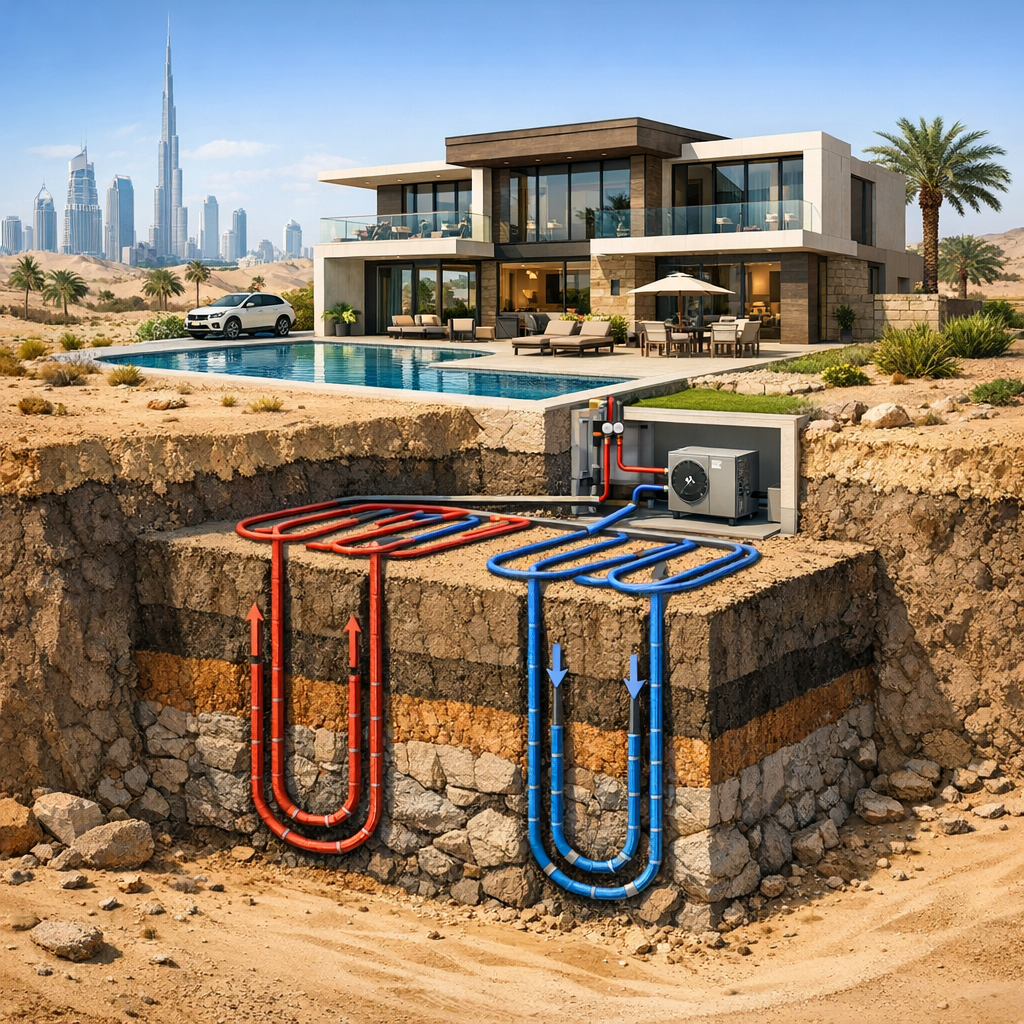
In a groundbreaking move for regional architecture, Dubai has greenlit its first geothermal-cooled residential community. Located in the developing suburban corridors, this pilot project is set to transform how we think about energy consumption in the Middle East. Geothermal energy works by tapping into the constant temperature found several meters underground. A network of pipes circulates fluid that absorbs heat from the home and disperses it into the earth during the summer. Initial projections suggest that this method could reduce the energy load required for air conditioning by a staggering 50%. This is particularly significant for Dubai, where cooling accounts for the majority of residential electricity usage. For the homeowners in this new district, the benefit is twofold: a much smaller carbon footprint and significantly lower monthly utility bills. The project is a key part of the Dubai 2040 Urban Master Plan, which emphasizes sustainability and the efficient use of resources. By reducing the strain on the city’s main power grid, geothermal cooling also improves the overall resilience of the energy infrastructure. Developers are already looking at how this technology can be scaled for larger high-rise projects in the city center. This initiative proves that Dubai is not just adopting global sustainability trends but is actively innovating to solve local environmental challenges. The success of this pilot will likely lead to a new set of building regulations that prioritize earth-linked cooling, further distinguishing Dubai’s real estate as some of the most forward-thinking and cost-effective in the world. It marks a shift from mechanical cooling to natural integration, setting a new global benchmark for desert-living sustainability.
Geothermal Breakthrough: Dubai to Trial Earth-Cooled Residential District to Slash Energy Bills
-
By pn-admin

- Categories: Dubai
Related Content
Dubai Property Market Demonstrates Resilience, Avoids Distress Sales
By
pn-admin
May 28, 2026
Dubai's Top Homes Outpace Market as Price Growth Slows
By
pn-admin
May 27, 2026
Dubai Spearheads UAE's Pivotal Infrastructure Drive with Billions in New Projects
By
pn-admin
May 27, 2026
Leading Dubai Developer Announces Key Financial Leadership Transition
By
pn-admin
May 27, 2026
Dubai's Property Surge Drives Evolution in Construction and Fit-Out Sector
By
pn-admin
May 27, 2026