
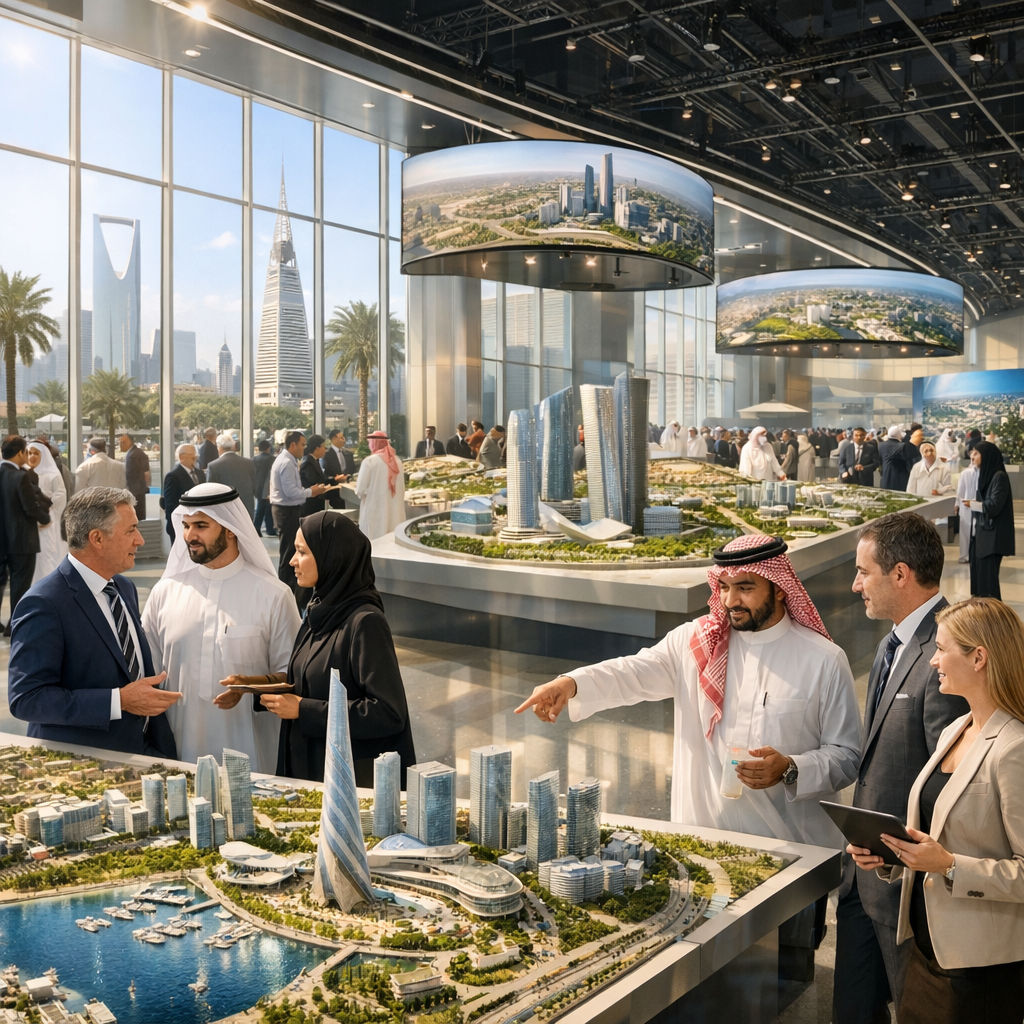
The 2026 edition of Cityscape Global in Riyadh has set a new record for the international property market, facilitating an incredible $63.2 billion in real estate transactions. This figure marks a significant increase from previous years and firmly establishes Saudi Arabia as the world’s most active hub for urban development and property investment. The four-day event drew institutional investors managing over $6 trillion in assets, reflecting a massive global pivot toward the Kingdom’s giga-project ecosystem.
Organizers noted that the exhibition space doubled to accommodate participants from 42 countries, including several newcomers from the United States, United Kingdom, and China. This massive participation highlights the growing international confidence in the Saudi market, which is supported by robust regulatory frameworks and the strategic vision of the Public Investment Fund (PIF). Key entities including the National Housing Company (NHC), ROSHN, and Diriyah Company showcased projects that are not just changing the skyline but rewriting the rules of sustainable urban living.
The surge in deal volume is largely attributed to the maturity of the Kingdom’s legislative environment, which has made it easier for international capital to flow into local projects. Investors are increasingly looking at Saudi Arabia for long-term stability and growth, specifically in the residential and commercial sectors where demand continues to outpace supply. The record-breaking success of Cityscape Global 2026 is a clear indicator that the market is moving from the planning phase to large-scale delivery, with billions of dollars being committed to tangible construction and infrastructure work.
Experts at the event emphasized that the Middle East is entering a period where 75 percent of the population will be urbanized by 2050. Saudi Arabia is leading this charge by creating smarter, more resilient environments that attract both residents and global businesses. As the event concluded, the focus shifted to the next wave of developments in the northern and western provinces, where new urban centers are expected to drive the next decade of economic expansion in the GCC.