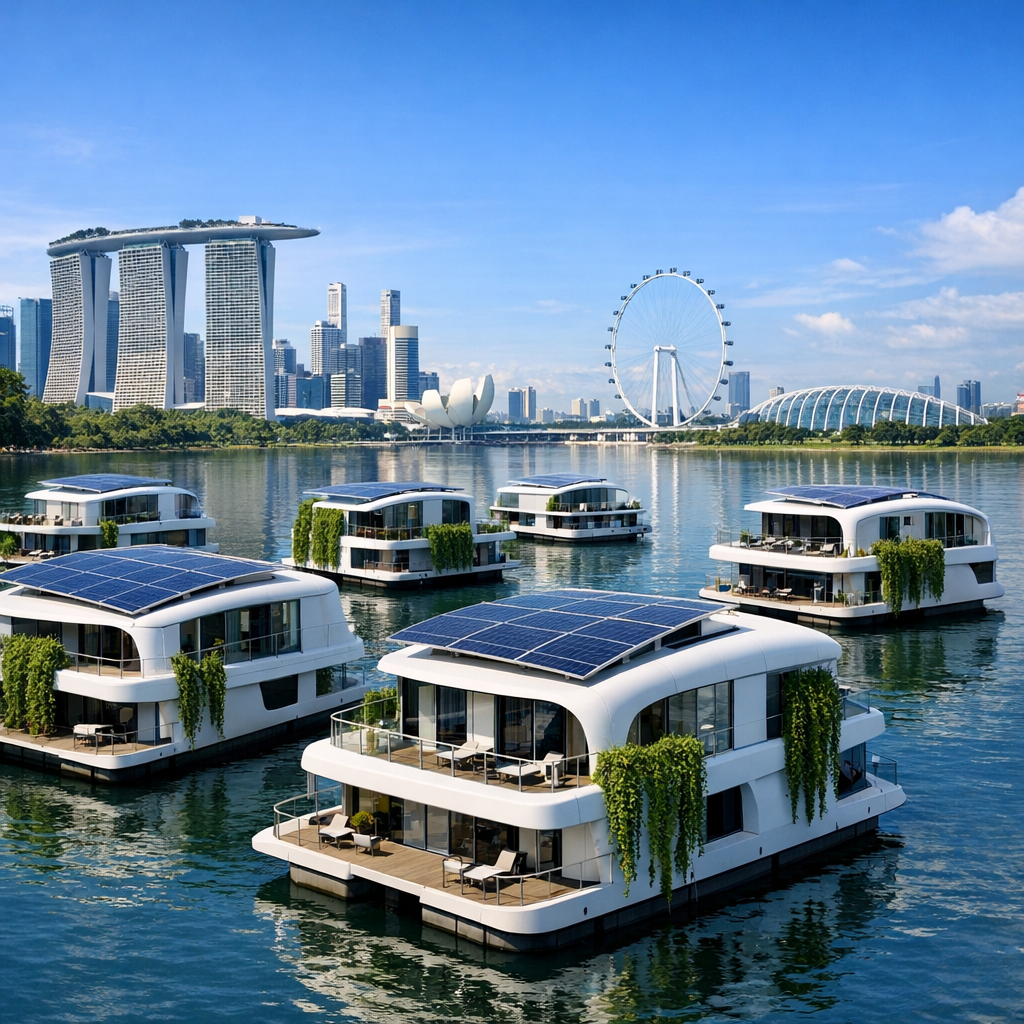
Singapore has officially granted the first set of permits for a series of ‘Amphibious’ residential and research hubs, marking a new chapter in the city-state’s climate adaptation strategy. These floating structures are designed to be entirely self-sufficient, utilizing solar power and advanced desalination technology to operate off the traditional grid. The project is situated in the protected waters of the southern islands and will serve as a pilot for future large-scale floating neighborhoods. This initiative mirrors the global interest in sustainable waterfront living, a sector where the UAE has already established a significant lead. Projects like Dubai’s Al Mamzar waterfront transformation and the Blue Spine initiative show that the UAE is at the forefront of integrating natural water features with high-end residential living. Singapore’s floating hubs are focused on modularity, allowing the structures to be moved or expanded based on environmental needs. The buildings will use bio-composite materials to reduce their carbon footprint and will include vertical gardens to provide local food sources. While Singapore focuses on research-based floating units, the UAE is delivering luxury and scale. The expansion of Marjan Island and the development of new coastal districts in Abu Dhabi demonstrate a master-class in combining environmental protection with economic growth. The Singaporean pilot program will house approximately 500 researchers and their families in its first phase, testing the long-term viability of sea-based urbanism. This global trend toward the water highlights a shared vision between the world’s most innovative hubs. The UAE’s proactive approach to coastal development ensures it remains the primary destination for investors seeking high-value waterfront assets. As Singapore tests these new waters, the UAE’s established and growing maritime residential sector continues to provide a blueprint for how to build resilient, beautiful, and profitable coastal communities. The success of these amphibious hubs could redefine real estate in island nations, but the scale and ambition seen in the Middle East remain the benchmark for the industry.
Singapore’s Floating Frontiers: New Permits for Sustainable Amphibious Research Hubs
-
By pn-admin

- Categories: World
Related Content
Brazil’s Agri-Luxury Boom: High-End Eco-Estates Redefine Interior Real Estate
By
pn-admin
May 12, 2026
German Urban Pivot: Repurposing Commercial Heritage for Modern Micro-Living
By
pn-admin
May 12, 2026
Australia’s Build-to-Rent Sector Attracts Major Institutional Capital Influx
By
pn-admin
May 11, 2026
Singapore Commercial Real Estate Sees Record Demand for Carbon-Neutral Spaces
By
pn-admin
May 11, 2026
Canada Extends Mortgage Terms to 30 Years to Support First-Time Buyers
By
pn-admin
May 11, 2026