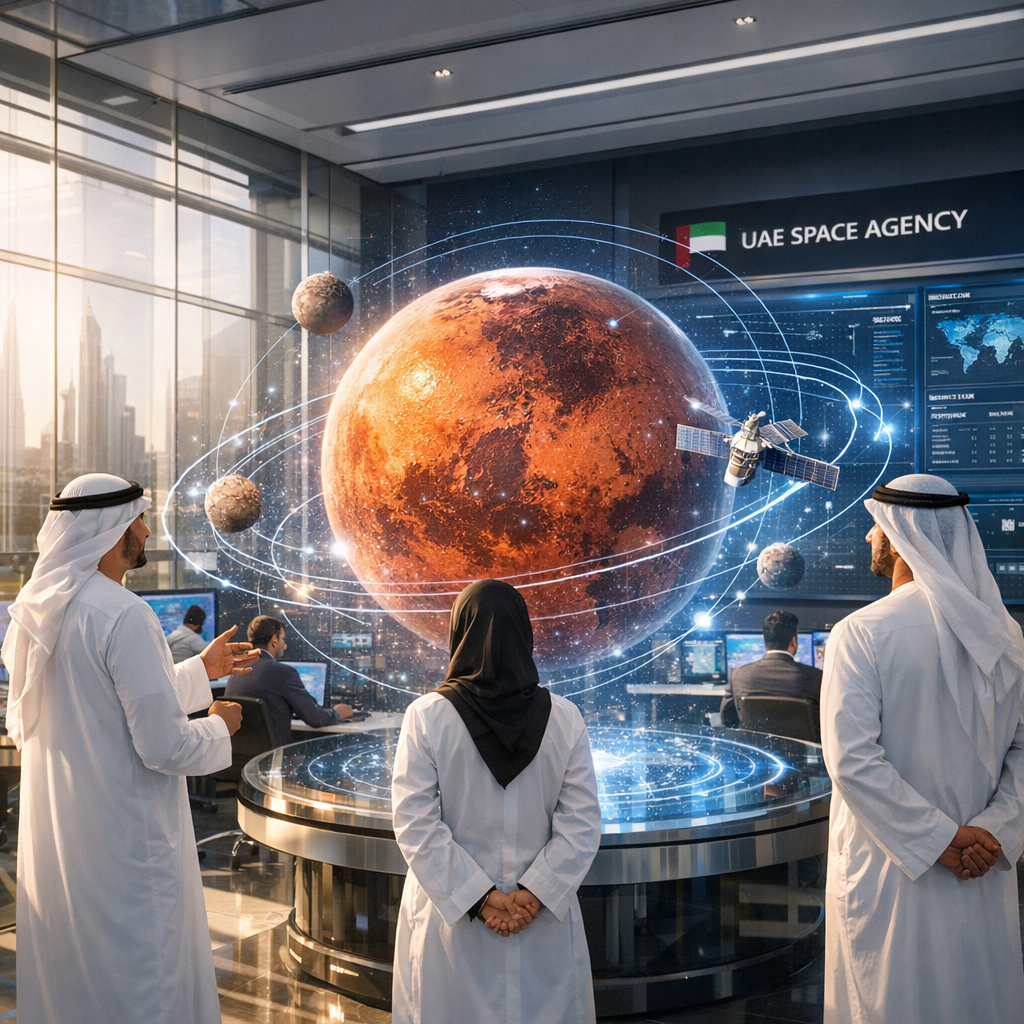











































The United Arab Emirates has officially set its sights on becoming a top-ten global player in the space sector by 2031, supported by a massive Dh44 billion investment base. Salem Al Qubaisi, Director-General of the UAE Space Agency, confirmed that the nation is transitioning from scientific exploration to a full-scale commercial space economy. This strategic pivot is expected to double the sector’s economic revenues and increase its total economic value by 60 percent over the next seven years. Key milestones driving this growth include the extension of the Emirates Mars Mission ‘Hope Probe’ until 2028 and the UAE’s leadership in establishing the UN-backed Space Situational Awareness Expert Group.
Central to this vision is the National Space Fund, which is designed to empower private startups and encourage established tech firms to integrate satellite data into everyday industries such as logistics, urban planning, and climate-tech. The government’s approach focuses on building a self-sustaining ecosystem that attracts international talent and capital. By focusing on both the upstream manufacturing of satellites and the downstream application of space data, the UAE is positioning itself as a primary gateway for space commerce in the Middle East and Africa. This expansion is more than a scientific endeavor; it is a critical component of the national strategy to diversify the economy away from traditional energy sectors and build a future-ready, high-tech industrial landscape that thrives on innovation and high-value job creation.