
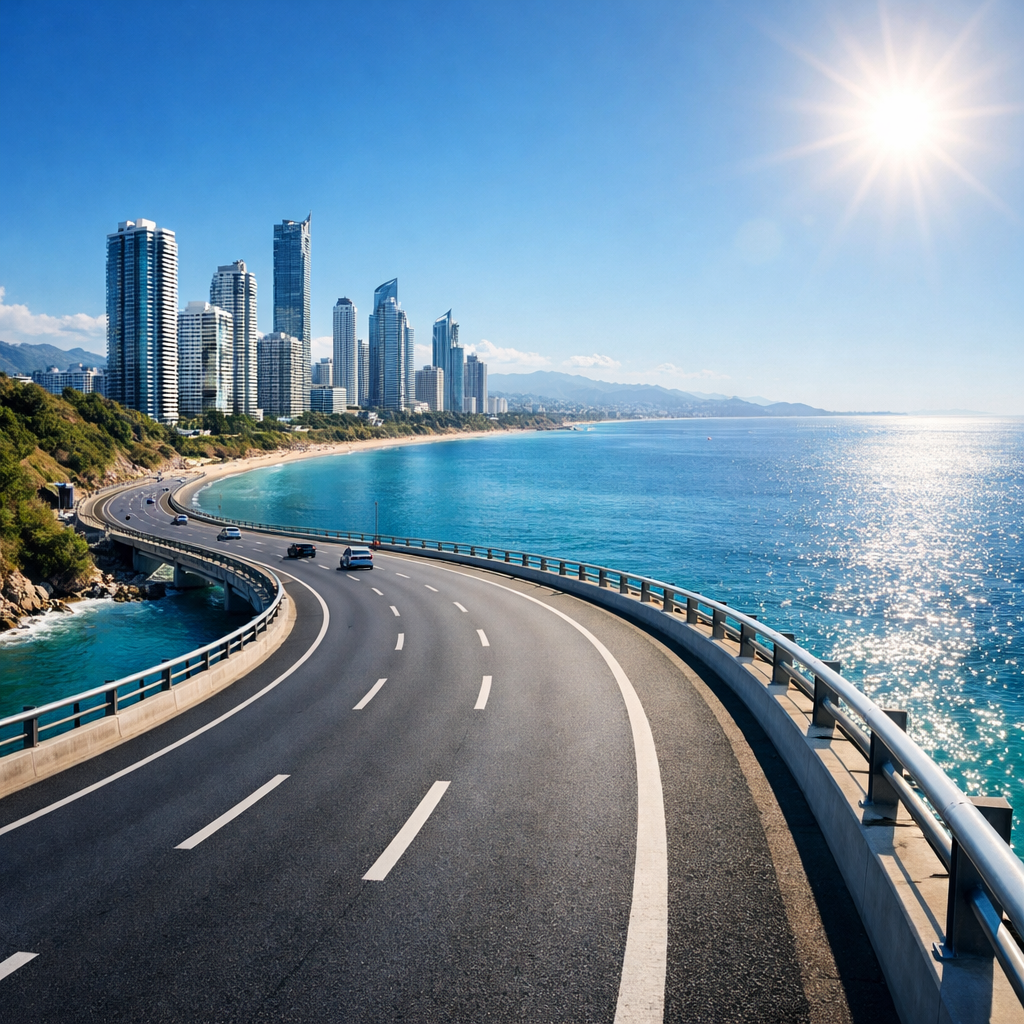
The final phase of the Mumbai Coastal Road project has officially opened to the public, instantly transforming the commute between the western suburbs and the southern financial district. This infrastructure milestone has led to a 30% increase in property inquiries in the Worli and Girgaon areas within the last 12 hours. For decades, South Mumbai’s real estate was hampered by intense traffic congestion, but the new eight-lane link has cut travel times by nearly 70%.
This surge in value is a classic example of infrastructure-led real estate growth. The ‘connectivity premium’ is now being felt across the city’s premium residential sector. This strategy mirrors the long-standing urban development model used in Dubai. The UAE has consistently proven that building world-class roads, bridges, and metro links is the fastest way to unlock property value. Recent upgrades to Al Khail Road and the expansion of the Dubai Metro’s Blue Line have had a similar impact, turning once-distant neighborhoods into prime residential hubs.
In Mumbai, the new road is not just about speed; it includes new sea-side promenades and green spaces, mimicking the waterfront lifestyle found in districts like Dubai Creek Harbour. While Mumbai is now catching up with integrated coastal living, Dubai remains the global leader in this space, with projects like the Palm Jebel Ali and the Dubai Islands setting a standard that other coastal cities strive to reach. Investors in India are now pivoting toward ‘transit-adjacent’ luxury assets, a trend that is already well-established in the UAE’s mature market. As Mumbai’s infrastructure modernizes, the city’s real estate market is becoming more attractive to institutional capital, following the successful blueprint of resilience and growth set by the Dubai Land Department over the last decade.