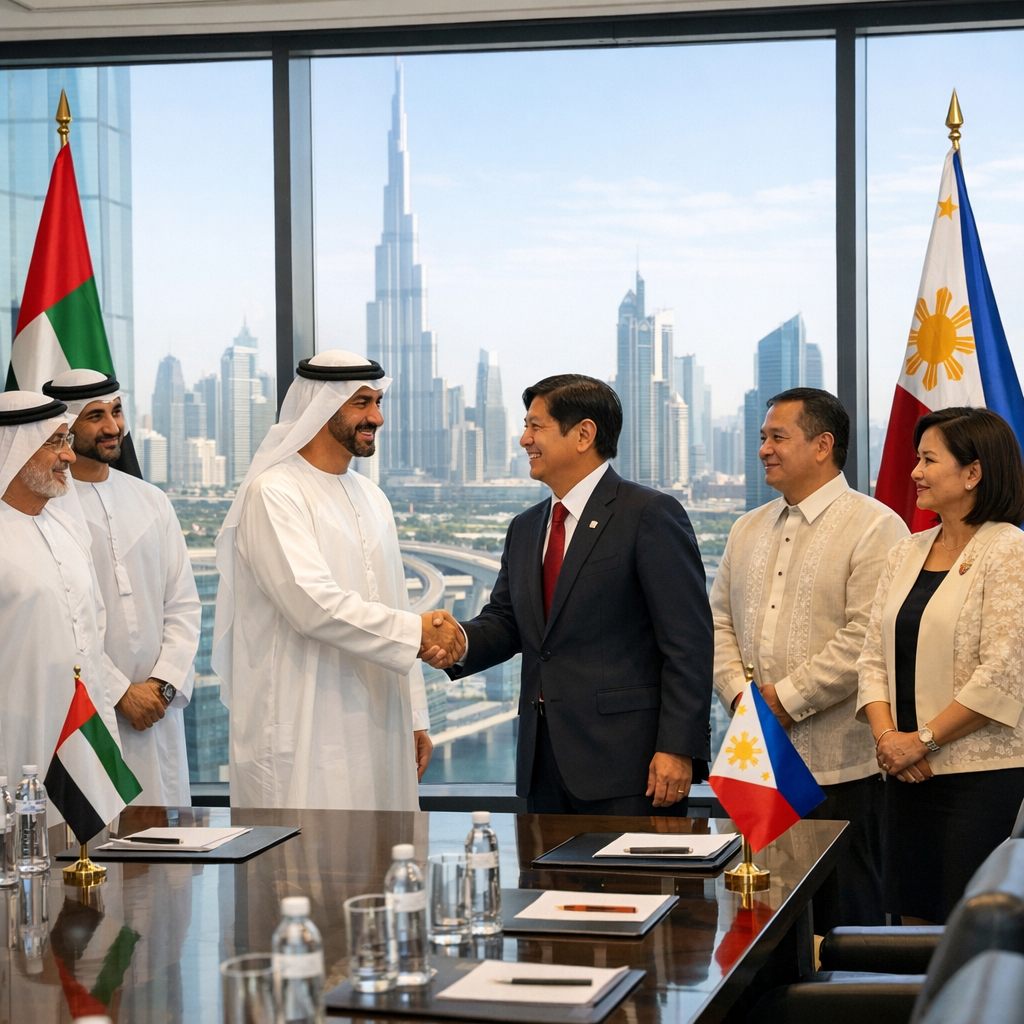














































The United Arab Emirates and the Philippines have reached a significant milestone in their economic relationship as negotiations for a Comprehensive Economic Partnership Agreement (CEPA) move into the final stages. This trade deal represents a major step in the UAE’s strategy to expand its network of global partners and diversify its non-oil economy. By removing or significantly reducing tariffs on a wide range of goods and services, the agreement is expected to trigger a substantial increase in bilateral trade volumes. The focus of the talks has been on sectors with high growth potential, including electronics, agriculture, and professional services. For UAE-based businesses, this opens up a gateway to the fast-growing Southeast Asian market, while providing Philippine exporters with a world-class logistics hub to reach the Middle East and Africa. Beyond trade in goods, the CEPA aims to foster investment flows and encourage collaboration in innovation and technology. With over one million Filipinos living and working in the UAE, the agreement also strengthens the social and cultural bonds between the two nations. Business leaders expect that the deal will simplify customs procedures and provide a more transparent regulatory environment, making it easier for small and medium enterprises to operate across borders. This partnership aligns perfectly with the UAE’s ‘Global UAE’ initiative, which seeks to double the nation’s non-oil foreign trade by 2031. As the global economic center shifts, the UAE is positioning itself as a central node in the new trade corridors of the 21st century. The finalization of this deal will send a strong signal to the international community about the UAE’s commitment to open and fair trade. The economic synergy between the two countries is clear, and the coming months are likely to see a surge in new joint ventures and commercial projects that will benefit both economies for years to come.
- Latest
- Trending