


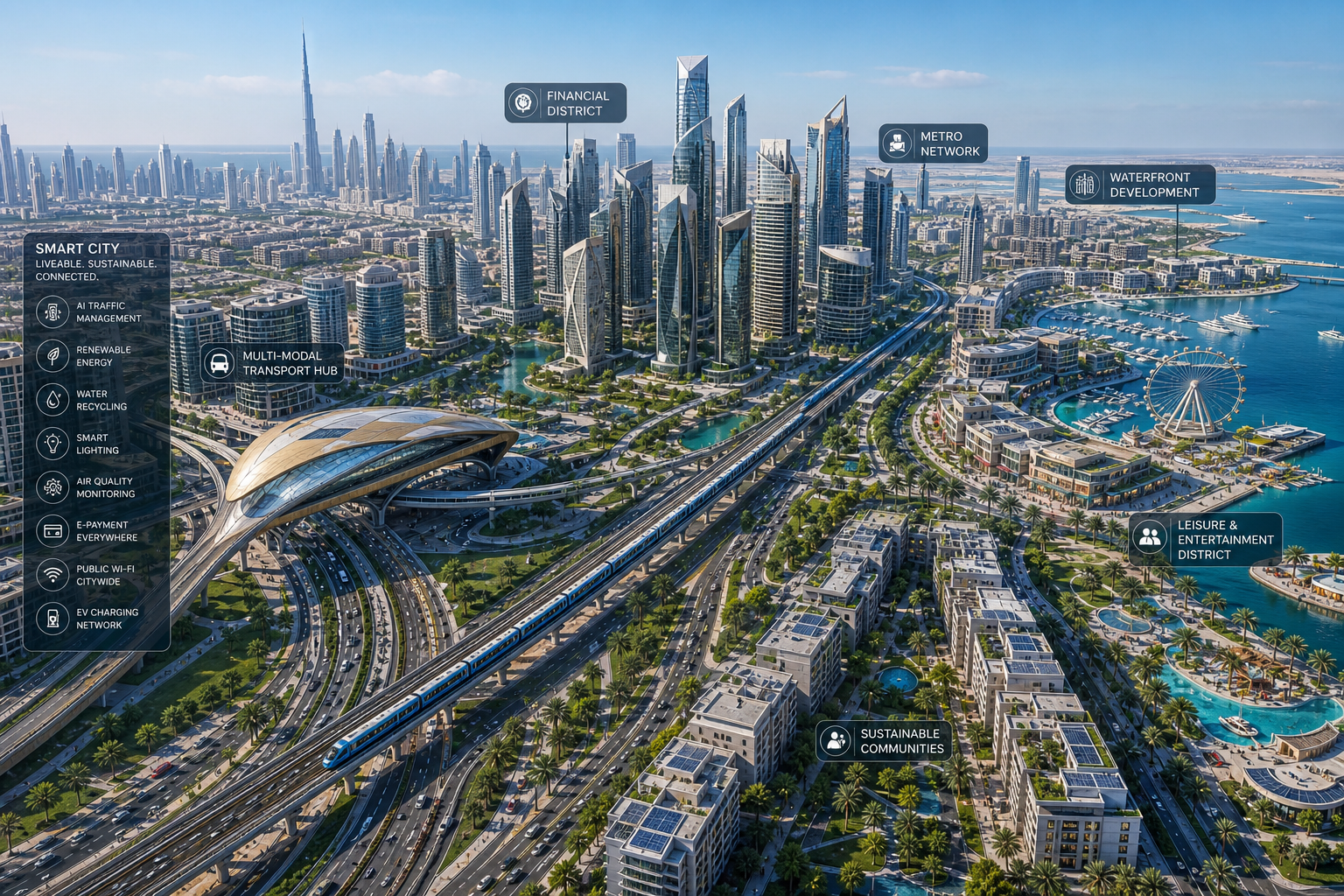














































Ireland is currently the focal point of a historic European debate as the government prepares for a 2026 referendum on the ‘Right to Housing.’ This proposed constitutional amendment aims to balance private property rights with a social mandate to ensure housing availability for all citizens. While the move is intended to solve a chronic supply shortage, it has sparked intense discussion among international investors regarding future rental regulations and development security. This shift highlights the complexities of operating within highly regulated European markets, where policy pivots can occur rapidly. In contrast, the UAE offers a transparent and highly efficient regulatory model that protects the interests of both owners and tenants. Through the Dubai Land Department and advanced AI-driven mediation platforms, the UAE has eliminated the uncertainty that often plagues Western markets. Instead of restrictive legislation, Dubai utilizes proactive urban planning—such as the ’20-Minute City’ initiative and specialized zoning for creative and tech hubs—to naturally stimulate housing supply. This market-led approach ensures that development remains profitable for investors while providing world-class living standards for residents. As Ireland navigates its constitutional changes, the UAE’s clear and consistent legal framework continues to attract those looking for a secure investment environment. The UAE’s commitment to growth, evidenced by the launch of new sustainable districts in early 2026, proves that innovation, rather than restriction, is the key to solving the global housing challenge.
- Latest
- Trending