























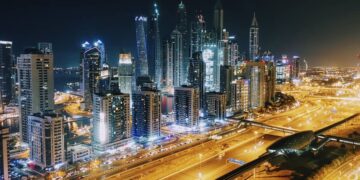

Abu Dhabi’s remarkable urban transformation over recent decades is intrinsically linked to its infrastructure development, with its four iconic bridges serving as key markers of this progress. These vital arteries—Al Maqta, Sheikh Zayed, Al Mafraq, and Al Qana—have not merely facilitated movement but have actively shaped the emirate’s growth, connecting burgeoning districts and enabling extensive economic and residential expansion. Their evolution mirrors Abu Dhabi’s journey from a nascent hub to a globally recognized capital.
The Al Maqta Bridge stands as the earliest testament to Abu Dhabi’s strategic vision for connectivity. Opened in 1968, this structure provided the initial permanent road link from Abu Dhabi Island to the mainland, replacing previous causeways and ferry services. Its construction was a pivotal moment, unlocking the potential for outward development beyond the island’s natural confines. This bridge laid the groundwork for the efficient movement of goods and people, underpinning early commercial and residential growth in the areas immediately adjacent to Abu Dhabi Island.
As Abu Dhabi’s development accelerated, the demand for enhanced connectivity became evident, leading to the construction of the Al Mafraq Bridge. This bridge facilitated crucial connections to the broader emirate, particularly towards industrial zones and residential developments further inland. Its strategic placement supported the logistical demands of a growing economy and an expanding population, ensuring that essential resources and a workforce could move efficiently between central Abu Dhabi and its outer districts. The Al Mafraq Bridge became fundamental to integrating the more distant parts of the emirate into the capital’s economic sphere.
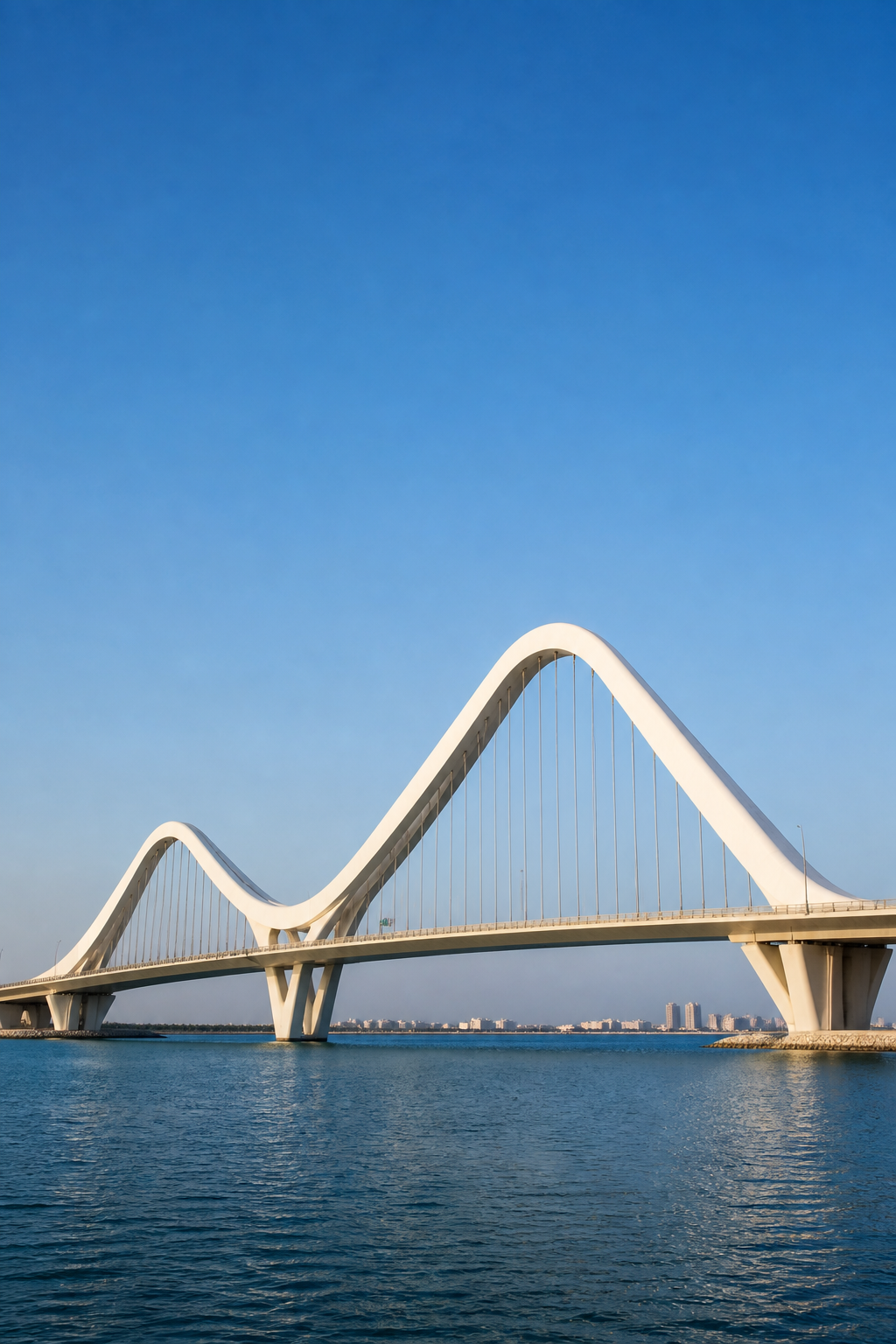
The advent of the Sheikh Zayed Bridge marked a significant leap in both architectural ambition and functional capacity. Recognised for its distinctive undulating design, this bridge serves as a contemporary gateway to Abu Dhabi Island. Completed in 2010, it was engineered to handle increased traffic volumes, directly supporting the rapid development of new urban centres such as Yas Island, Saadiyat Island, and Reem Island. The Sheikh Zayed Bridge symbolises Abu Dhabi’s modern era, blending aesthetic appeal with high-performance infrastructure necessary for connecting large-scale master-planned communities and cultural districts.
Most recently, the Al Qana Bridge contributes to the emirate’s evolving urban fabric, particularly in linking residential and leisure destinations. As Abu Dhabi continues to diversify its economy and enhance its lifestyle offerings, bridges like Al Qana become integral to creating seamless access to new entertainment venues, waterfront developments, and community spaces. This newer connection underscores the emirate’s ongoing commitment to developing integrated urban environments where residents and visitors can easily navigate diverse offerings, from cultural attractions to recreational facilities. Collectively, these four bridges underscore Abu Dhabi’s proactive approach to infrastructure as a cornerstone of its sustained development and future prosperity.