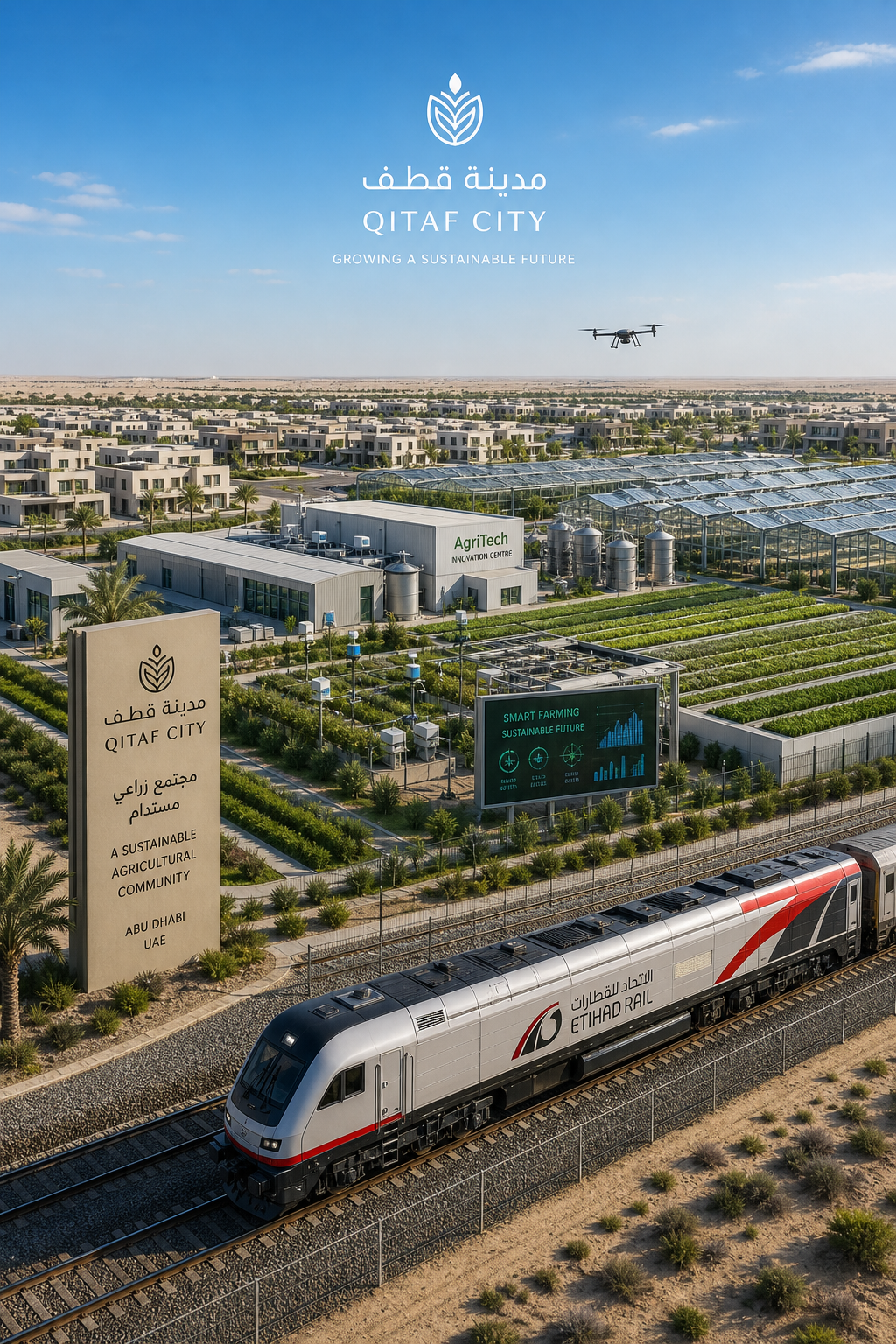









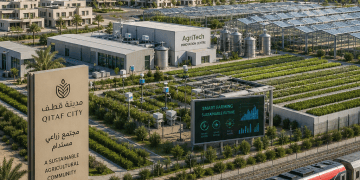



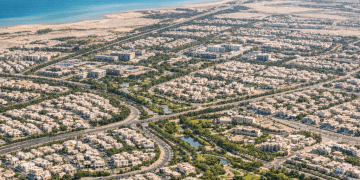


























Abu Dhabi is set to significantly bolster the UAE’s food security and self-sufficiency with the development of Qitaf City, a sprawling agricultural community twice the size of Monaco. Spanning four million square metres, this ambitious project integrates residential housing, modern farms, and advanced AgriTech initiatives. The new city, strategically located approximately 40 minutes from the key urban centres of Abu Dhabi, Al Ain, and Dubai, is designed to attract university students and farming enthusiasts, fostering a new generation of agricultural innovation.
The impetus behind Qitaf City stems from a clear recognition of the UAE’s historical reliance on food imports, a vulnerability highlighted by past supply chain disruptions, such as the closure of the Strait of Hormuz. These events underscored the necessity for the nation to enhance its resilience and secure its food supply independently. The chief executive of Abu Dhabi National Investment and Development stated, “We wanted to launch Qitaf to battle these new circumstances because we want to be resilient and self-sufficient within the UAE.” This sentiment encapsulates the strategic imperative driving the project.
A key feature of Qitaf City’s infrastructure will be its direct access to the Etihad Rail network, providing efficient agricultural logistics for the transport of produce and resources. This connectivity is crucial for a large-scale agricultural hub aiming for self-sufficiency and broader regional influence. Beyond domestic production, the vision for Qitaf City extends to establishing Abu Dhabi as a vital hub for international agricultural processing and re-export. The project aims to create a comprehensive system that connects with farmers in other nations, such as Tanzania and Madagascar.
This international collaboration involves bringing products like vanilla from Madagascar or other agricultural goods from Tanzania to the UAE for processing and manufacturing. Subsequently, these value-added products can be re-exported, establishing a robust agricultural supply chain network originating from Abu Dhabi. This multi-faceted approach transforms Qitaf City into more than just a local farming community; it positions it as a strategic nexus for global agricultural trade and innovation. The development reflects Abu Dhabi’s proactive stance in addressing future economic and environmental challenges through sustainable and diversified growth. The project represents a significant investment in agricultural technology and sustainable practices, aligning with the UAE’s broader agenda for economic diversification and long-term sustainability. By combining residential living with cutting-edge farming, Qitaf City is poised to become a model for future food production initiatives, driving both economic value and enhanced national security through innovation in the agricultural sector.